
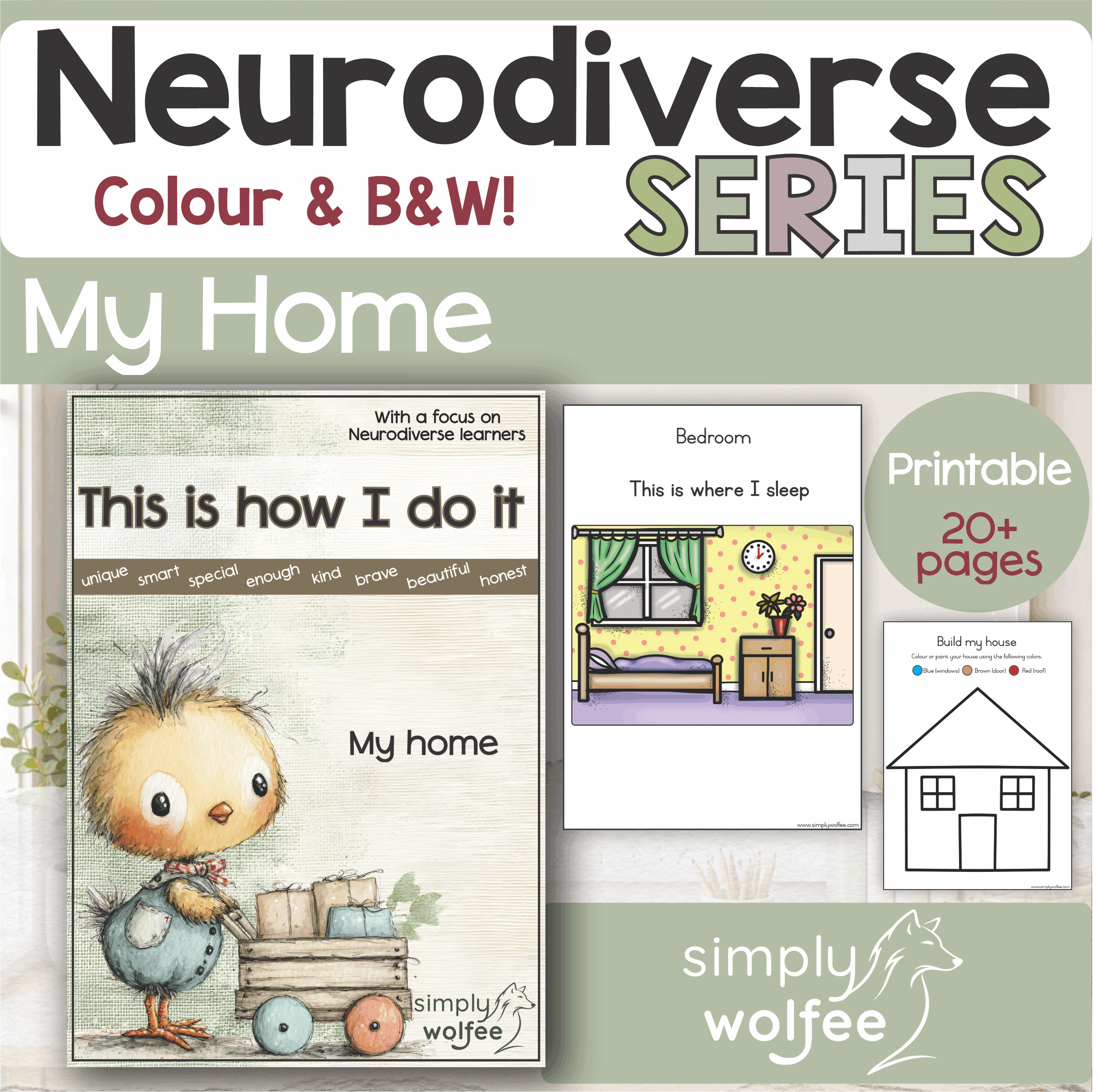
This is how I do it – My Home
This booklet contains 25 pages in colour and 25 pages in black and white.
We extend our heartfelt thanks to Curamus School for Autism for their support and invaluable assistance with the design of these booklets.
This booklet is a learning resource designed specifically for neurodiverse learners to help them understand their home environment, daily routines and the different rooms in a house. The aim of the booklet is to help children recognise familiar spaces, understand where everyday activities take place and build vocabulary related to the home.
Through simple visual activities, sorting tasks and short reading exercises, learners explore the different parts of a home and the activities that happen in each space. This helps children build understanding of their daily routines and surroundings in a clear and structured way.
Sections / Themes included in the booklet:
The booklet introduces different aspects of a home through engaging activities.
1. My family
Children begin by drawing or pasting a picture of their family, helping them connect the learning material to their own home life.
2. Build my house
Learners colour a house using specific instructions, for example:
- Blue windows
- Brown door
- Red roof
This activity supports colour recognition and understanding parts of a house.
3. Kitchen activities
Children identify items that belong in a kitchen by circling the correct pictures.
Examples include:
- bread
- eggs
- kettle
- frying pan.
4. Setting the table
Learners practise life skills by cutting and pasting items to set a table correctly, such as placing:
- a plate
- fork
- knife
- glass.
5. Bedroom recognition
Children identify which objects belong in a bedroom and which do not.
They also match bedroom furniture to where it belongs.
6. Bathroom items
Learners circle items that belong in the bathroom and cross out items that do not belong there.
7. Daily routine at home
Children cut and paste pictures to place daily activities in the correct order, for example:
- wake up
- brush teeth
- eat breakfast
- go to school
- eat lunch
- play or do homework
- bath time.
8. My pets
Learners draw their own pet or a dream pet and answer simple questions about it, such as:
- the pet’s name
- the type of animal
- how many legs it has.
They also identify which animals can be pets.
9. Reading comprehension
Children read a short story about Ben and his home and answer questions about it, helping develop early reading comprehension skills.
10. Following instructions
Learners complete colouring pages by following specific instructions, such as colouring certain objects or circling items in the picture.
11. Rooms in a house
The booklet introduces different rooms and their functions, for example:
- Bedroom – where I sleep
- Dining room – where I eat
- Kitchen – where I cook
- Laundry room – where I wash clothes
- Living room – where I relax
- Bathroom – where I bath
- Playroom – where I play
- Backyard – where I play outside.
Benefits of this booklet for the child:
These activities help develop important skills such as:
- understanding daily routines
- recognising rooms and household items
- life skills such as setting the table
- sorting and categorising objects
- reading comprehension and vocabulary development
- following instructions
- fine motor skills through cutting, colouring and matching
The visual and practical activities make it easier for learners to connect the learning material to their own home experiences.
Important information
This booklet is available in both colour and black-and-white versions.
It is provided in PDF format for easy printing.
These booklets may not be resold or redistributed.
Only logged in customers who have purchased this product may leave a review.
Your content goes here. Edit or remove this text inline or in the module Content settings. You can also style every aspect of this content in the module Design settings and even apply custom CSS to this text in the module Advanced settings.
Reviews
There are no reviews yet.