
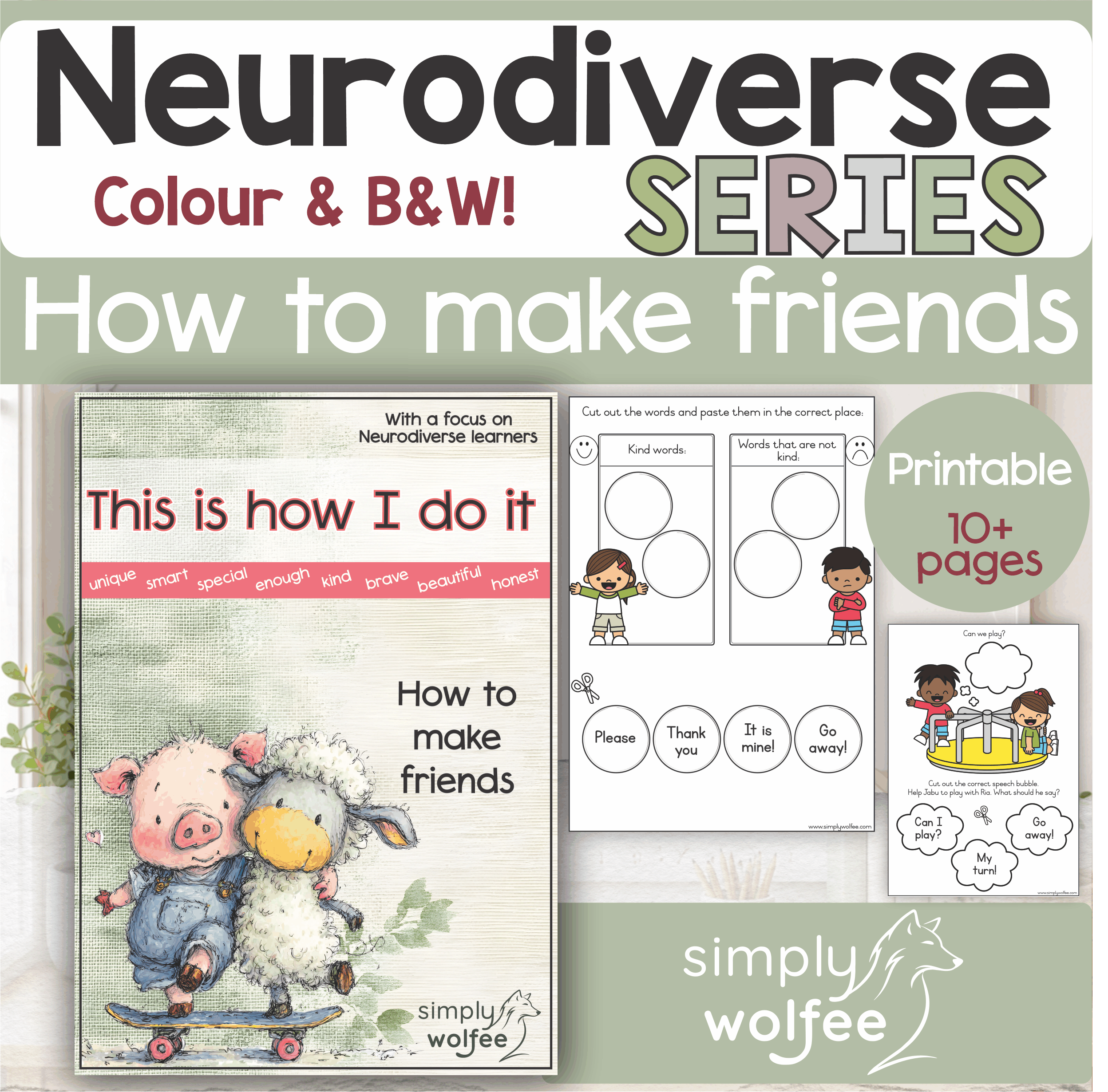
This is how I do it – How to make friends
This booklet contains 8 pages in color and 8 pages in black and white.
We extend our heartfelt thanks to Curamus School for Autism for their support and invaluable assistance with the design of these booklets.
This booklet is a learning resource designed specifically for neurodiverse learners to help them understand how to make and keep friends. The aim of the booklet is to teach children simple and practical social skills for positive friendships through clear pictures, simple sentences and structured activities.
Learners practise important social behaviours such as greeting others, asking to play, taking turns and using kind words. These activities help children understand how to interact with others in a respectful and friendly way.
The visual examples make social situations easier to understand and practise.
Sections / Themes included in the booklet:
The booklet contains several activities that teach the basic steps for making and maintaining friendships.
1. Drawing a friend
Children begin by drawing a picture of themselves and a friend, helping them think about friendship and the people around them.
2. Greeting a friend
Learners practise simple ways to greet others.
Examples include:
- I can say hello.
- I can smile.
Children also identify whether characters in pictures look friendly or unfriendly.
3. Asking to play
Children practise appropriate ways to join a game.
For example, learners choose the correct phrase:
- “Can I play?”
Instead of using unfriendly responses such as:
- “Go away!”
- “My turn!”
4. Taking turns
Learners practise understanding turn-taking when playing with others.
Examples include using phrases such as:
- My turn.
- Your turn.
This activity helps children understand fairness during play.
5. Using kind words
Children learn the difference between kind words and unkind words.
Examples of kind words:
- Please
- Thank you
Examples of unkind words:
- It is mine!
- Go away!
6. What to do if someone says no
The booklet also teaches children how to respond if a friend does not want to play.
Possible choices include:
- Ask someone else.
- Play alone.
- Try again later.
This helps learners understand social boundaries and problem-solving.
7. Steps for a good friendship
Children learn the basic steps for building friendships:
- Say hello.
- Ask to play.
- Take turns.
- Say goodbye.
These steps help learners remember how to interact positively with others.
Benefits of this booklet for the child:
These activities help develop important skills such as:
- social communication skills
- understanding social expectations
- turn-taking and cooperation
- using polite and kind language
- problem-solving in social situations
- building confidence when interacting with others
The clear pictures and simple language help learners practise friendship skills in a structured and supportive way.
Important information
This booklet is available in both colour and black-and-white versions.
It is provided in PDF format for easy printing.
These booklets may not be resold or redistributed.
Only logged in customers who have purchased this product may leave a review.
Your content goes here. Edit or remove this text inline or in the module Content settings. You can also style every aspect of this content in the module Design settings and even apply custom CSS to this text in the module Advanced settings.
Reviews
There are no reviews yet.